How to Size a Tool Belt Correctly (Step-by-Step Guide)
· By Hamza Ehsan
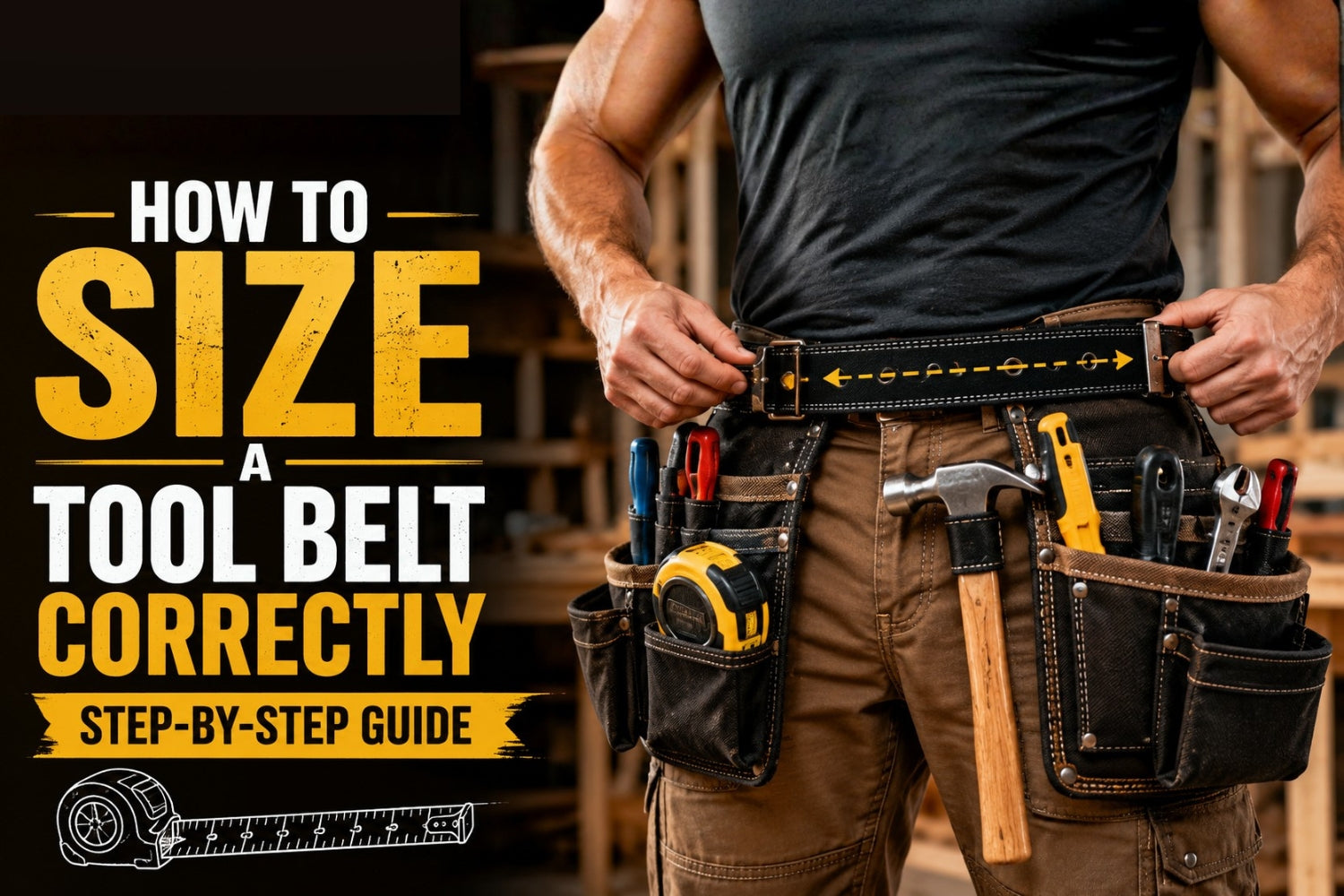
You showed up to the job site. You loaded your pouches. You buckled your tool belt and within an hour it's sagging off your hips, digging into your lower back, or spinning every time you reach down. Sound familiar?
The problem isn't your tools. It's not your posture. It's the fit. A poorly sized tool belt is one of the most overlooked sources of daily discomfort for tradespeople and it quietly kills your efficiency, hour after hour, shift after shift.
In this guide, we'll walk you through exactly how to size a tool belt correctly with the same precision you bring to your craft. Whether you're a carpenter, electrician, roofer, plumber, or framer, this step-by-step process will help you find a perfect fit the first time, every time.
Quick answer: Measure around your hips over your work clothes NOT your pants size. Most tradespeople need a tool belt 4 to 7 inches larger than their trouser waist. Read on for the full guide.
Why Getting the Right Tool Belt Size Matters
Most tradespeople pick a tool belt based on looks, brand, or price and skip the sizing step entirely. That's a costly mistake. Here's what's actually at stake:
• Comfort over long shifts: A correctly fitted tool belt distributes weight evenly across your hip bones and lower back. Too tight and it restricts your movement; too loose and it shifts with every step.
• On-the-job productivity: When your belt sits right, your tools stay where you put them. No rotating pouches, no reaching into the wrong pocket, no wasted seconds.
• Long-term physical health: A poorly fitted tool belt causes cumulative strain on your lower back, hips, and shoulders one of the leading reasons experienced tradespeople develop chronic pain.
• Belt durability: A leather tool belt that fits correctly wears evenly. One buckled at an extreme hole too tight or too loose develops stress points and fails faster.
Pro Tip: A full-grain leather tool belt naturally molds to your body over time but only if you start with the right size. Get the fit correct from day one.
The #1 Tool Belt Sizing Mistake (And How to Avoid It)
Plain and simple: do not use your pants size to size your tool belt.
This is the single most common mistake and it almost always results in a belt that's too small. Here's why:
• Tool belts are worn over your work clothing jeans, a work belt, a shirt, and often a hoodie or jacket. Your bare waist measurement has nothing to do with your actual working circumference.
• Tool belts sit on the hips, not the trouser waistband. Your hip circumference is typically 3 to 7 inches larger than your pants waist size.
• Jeans and work trousers are made with stretch fabric that adapts to your body. Leather tool belts are structured and rigid they do not stretch.
Remember: Your tool belt size will almost always be 4 to 7 inches larger than your pants waist size. Measure never guess.
Step-by-Step - How to Measure for a Tool Belt
What You Need
• A soft cloth tape measure
• Your full work outfit (everything you wear on the job)
• A pen and paper to record your measurement
Step 1 - Put On Your Full Work Outfit
This step is non-negotiable. Measure over the exact clothing you wear on a typical workday. If you wear jeans, a work belt, a shirt, and a hoodie put all of it on before you take a single measurement. If your job involves seasonal layers (cold mornings on site, heavy winter gear), measure in your bulkiest typical outfit. A belt with a couple of extra inches of adjustment is far better than one that's too tight come November.
Step 2 - Locate Your Tool Belt Position
Before you measure, decide exactly where on your body you'll wear the belt. Most tradespeople wear a tool belt low on the hips sitting below the natural waist so the weight rests on the hip bones rather than the spine. This is the most ergonomic and most common position.
Some prefer a higher waist position for lighter loads. Either way, identify your position before measuring. Measuring in the wrong spot means the wrong size.
Step 3 - Take Your Working Circumference Measurement
Wrap your tape measure around your body at the exact point where the belt will sit. Keep it snug but not compressed you want it lying flat against your clothing, not pulling it tight.
Write this number down. This is your working circumference the single most important number in tool belt sizing. Everything else flows from here.
Step 4 - Match Your Measurement to the Size Chart
Use the table below to identify your belt size. For a detailed chart with trade-specific notes, see our full tool belt size guide.
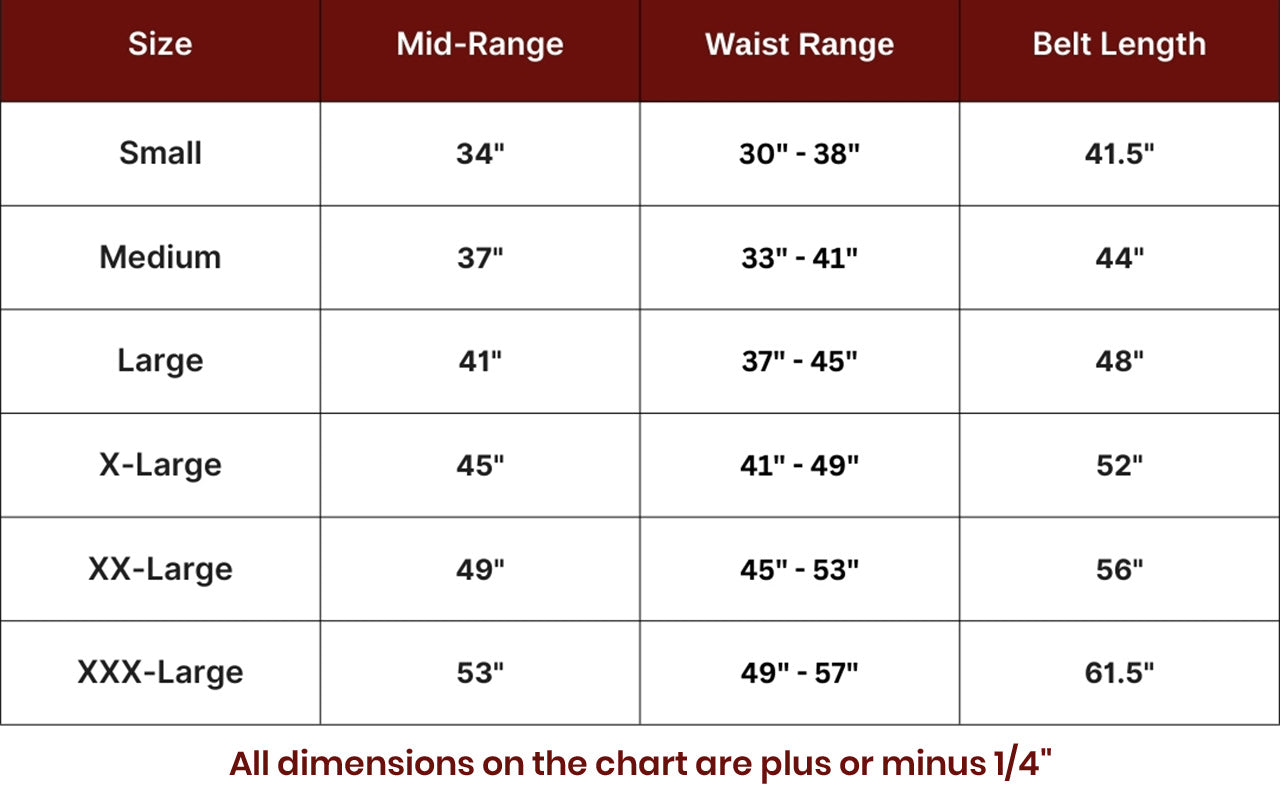
Step 5 - When In Doubt, Size Up
If your measurement lands right between two sizes, always go with the larger one. A slightly large belt can be adjusted at the buckle. A belt that's too small cannot be let out it will dig in, restrict your movement, and become unwearable.
• Larger belt: adjustable at the buckle, leather will mold to you over time
• Smaller belt: no fix digs into your side, restricts bending, causes pain
• Full-grain leather naturally breaks in and conforms to your body so a small amount of initial looseness corrects itself with regular wear
Step 6 - Already Own a Tool Belt? Measure the Belt Itself
The most accurate sizing method for a replacement or upgrade is measuring your current belt not your body. Here's how:
1. Lay your existing tool belt flat on a hard surface
2. Find the hole you use most often this is your working hole
3. Measure from the fold of the buckle to that hole
4. That number is your working belt size use it against the chart above
Don't have a belt to measure? Borrow one from a coworker for 2 minutes, or use a length of rope or string tied where the belt would sit then measure the string.
How to Know If Your Tool Belt Fits Correctly
Once you've put your belt on, run these two quick checks before you ever load a tool into it:
The Gap Test
After buckling, look at the space between the two ends of the belt at the front.
• 1 to 4 inches of gap: perfect fit comfortable and adjustable
• 5+ inches of gap: belt is too large will rotate and shift during work
• No gap / ends meeting: belt is too small size up immediately
The Movement Test
Load your belt with your standard tools and pouches. Then walk, crouch, climb a ladder, and reach overhead the full range of movements you make every day. A correctly fitted tool belt will:
• Stay in position without you touching it
• Not rotate or spin around your body
• Sit level no tilting forward, backward, or to one side
• Feel secure and snug without restricting your breathing or bending at the waist
• Not dig into your hip bones or create pressure points after 30 minutes
Should You Add Suspenders?
If you carry a heavy load framers, carpenters, and roofers with full pouches know this well even a perfectly fitted tool belt will put strain on your lower back over a full shift. This is where tool belt suspenders make a real difference.
Suspenders transfer a significant portion of the weight from your hips and lower back up to your shoulders, reducing fatigue and protecting your spine across long working days. If your loaded belt weighs more than 10–12 lbs, suspenders aren't optional — they're essential.
Sizing note: If you plan to wear suspenders, your belt measurement stays exactly the same. The belt can sit slightly looser since the suspenders carry much of the load.
Tool Belt Sizing Tips by Trade
Carpenters & Framers
Framers carry the heaviest loads hammers, squares, nail bags, pencils, levels. Accurate sizing is especially critical here because even a small shift in the belt affects your hammer swing, your reach, and your balance on scaffolding. Measure precisely, wear your layers, and seriously consider adding suspenders to protect your back across full-day builds.
Electricians
Electricians regularly work in confined spaces inside walls, above drop ceilings, inside panel boxes. A belt that's even slightly too large will snag and shift at exactly the wrong moments. Electricians benefit most from a snug, accurate fit with a streamlined pouch setup typically 3 to 5 pockets with specialized holsters rather than bulky open pouches.
Roofers
Working at height means a loose tool belt is a genuine safety hazard not just an inconvenience. Roofers should prioritize a snug, secure fit over everything else, and always pair their belt with suspenders to eliminate any chance of the belt shifting on a slope or during sudden movement.
Plumbers & HVAC Technicians
These trades demand full range of motion under sinks, in crawl spaces, contorting through utility rooms. A belt that binds, pinches, or restricts hip movement adds physical stress to an already demanding job. Plumbers and HVAC techs should size for maximum comfort and mobility, keeping the pouch load as light as the job allows.
How Bolt Belts Sizing Works
At Bolt Belts, we size every product by your actual working measurement — not a generic guess. Our premium full-grain leather tool belts are built to last years on the job, and we want your investment to fit perfectly from the very first day you wear it.
• Every belt is available in S through 4XL, sized to your working circumference measurement not your pant size
• Custom sizing is available on every product if you fall between sizes or have a unique measurement, we build it to fit
• Each belt includes multiple adjustment holes to accommodate seasonal layering and clothing changes throughout the year
• Our full-grain leather naturally molds and forms to your body shape over time, becoming more comfortable with every shift
• Not sure about your size? Our team is happy to help contact us before you order and we'll make sure you get it right the first time
Bolt Belts are made for professionals who take their craft seriously. We don't cut corners on materials and we don't want you cutting corners on fit. Measure correctly, use the chart, and get a belt that works as hard as you do.
Fit Is the Foundation
Your tool belt is on your body for 8 to 10 hours a day. It carries every tool you rely on. A belt that doesn't fit right doesn't just feel bad it slows you down, wears your body out, and costs you money in the long run.
Follow the six steps in this guide. Measure over your actual work clothes. Use the size chart. And if you ever have a question about sizing, our team at Bolt Belts is always a message away.
We build premium full-grain leather tool belts, pouches, and suspenders for tradespeople who take their craft seriously. Every product is built to last, sized to fit, and made to work as hard as the person wearing it.
FAQ's
Q: My pants are a size 34 what tool belt size do I need?
Do not use your pants size. Measure your body at the hip, over your work clothes, at the exact point where the belt will sit. Most tradespeople wearing size 34 trousers will measure between 38" and 42" at their working position — putting them in a Large or X-Large tool belt. Always measure first.
Q: Can I use my regular dress belt size for a tool belt?
No. Dress belts are worn at a different position, over different clothing, and measured differently. Your tool belt needs to fit over your full work outfit at your hip position. Use the step-by-step measurement method above for an accurate result.
Q: What if my measurement falls exactly between two sizes?
Always choose the larger size. A slightly large belt is adjustable. A belt that is too small cannot be fixed it will be uncomfortable and may become impossible to wear comfortably over time.
Q: Will a leather tool belt stretch to fit over time?
Full-grain leather does not stretch in the way synthetic materials do. It will conform and mold to the specific shape of your body but it will not increase in circumference. If a leather tool belt is too small on day one, it will remain too small. There is no workaround. Size correctly from the start.
Q: My tool belt keeps rotating to one side what does that mean?
Rotation is a classic sign that the belt is too large. The belt circumference is bigger than your body, so gravity and movement pull it sideways. Size down, or try the belt at a tighter buckle hole. If there's no tighter hole available, you need a smaller size.
Q: How do I know when my tool belt fits perfectly?
A perfect fit means: the belt sits level and stays put through a full day of work without adjustment; there is 1 to 4 inches of gap between the belt ends; loaded pouches hang at the same height on both sides; you can crouch, reach overhead, and climb without the belt shifting; and there are no pressure points or discomfort after 30 minutes of wear.
Shop Bolt Belts | Premium Leather Tool Belts Built for Pros