Leather Garden Tool Belt Review | What to Look For Before You Buy
· By Hamza Ehsan
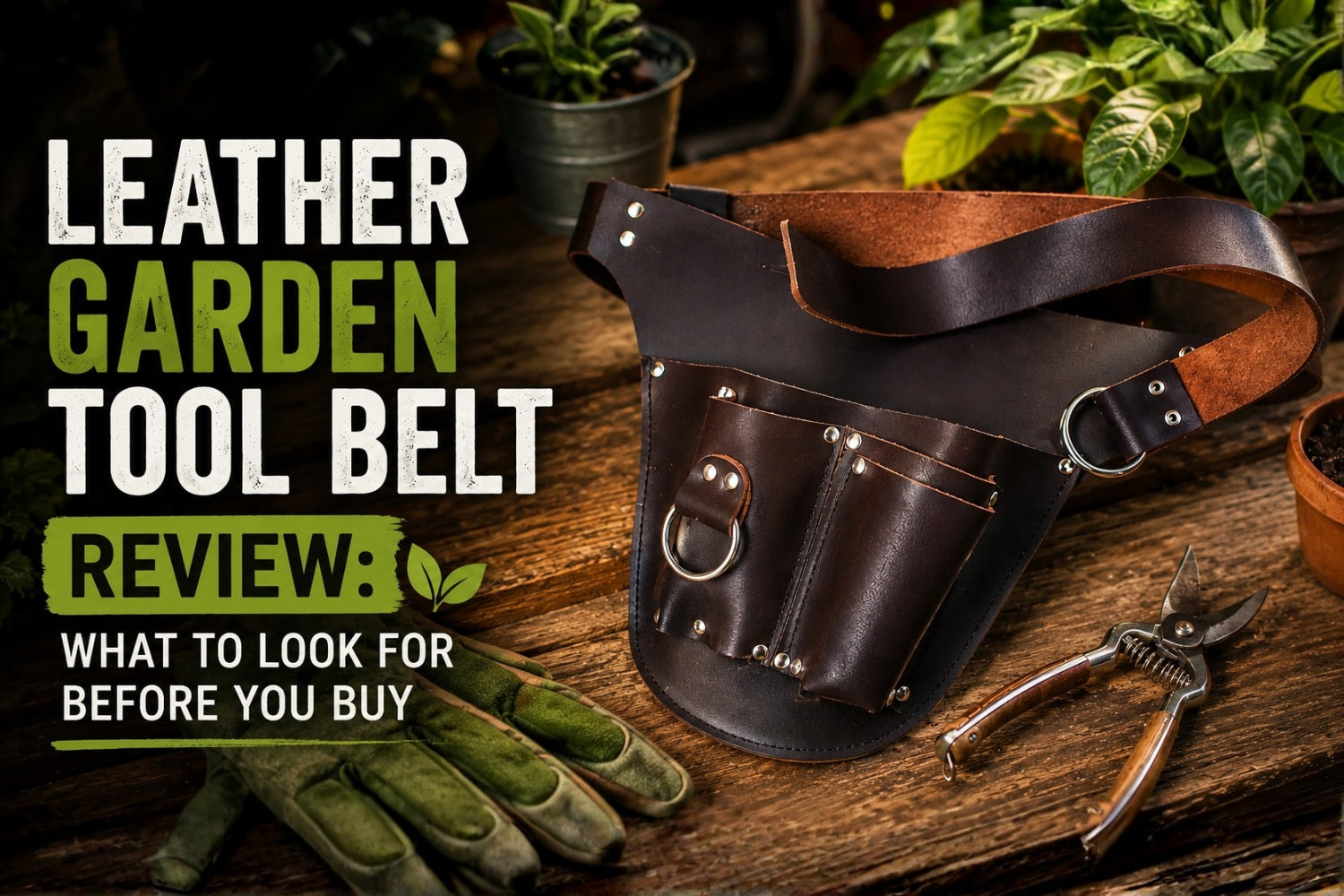
If you spend serious time in your garden, you already know that hauling tools back and forth to the shed wastes precious growing time. A leather garden tool belt solves that problem permanently keeping your pruners, trowel, gloves, and twine right at your hip, ready whenever you need them. But not all garden tool belts are created equal. In this in-depth leather garden tool belt review, we break down exactly what separates a belt that lasts one season from one that lasts a lifetime. Whether you're a weekend backyard gardener or a serious horticulturist, this guide will help you make the right investment before you buy.
Why Choose a Leather Garden Tool Belt Over Canvas or Nylon?
The garden tool belt market is flooded with cheap canvas and synthetic nylon options. They're tempting because they're light and affordable. But ask any seasoned American gardener and they'll tell you the same thing: leather wins every time when it comes to longevity, structure, and feel.
Here's why a leather garden tool belt is worth every penny:
🌿 Durability that outlasts the competition: Full grain leather garden tool belts don't fray, tear, or sag the way canvas does after a wet season. With proper care, a quality leather belt lasts 10–20 years. That's decades of planting seasons from a single purchase.
🌿 Rigid pocket structure: Leather holds its shape even when empty. Canvas pouches collapse the moment you remove your trowel, making it frustrating to re-insert tools with one hand. Leather stays open and ready.
🌿 Weather resistance: Quality leather naturally resists light moisture. A little rain or dewy morning grass won't ruin a well-conditioned leather belt and it only gets better with age as it molds to your body shape.
🌿 Professional aesthetics: There's something timeless about a leather garden tool belt. It looks intentional, crafted, and serious whether you're tending a rooftop container garden in Chicago or a sprawling backyard plot in Texas.
🌿 Comfort over long sessions: Leather softens and molds to your body over time, making it significantly more comfortable for hours of kneeling, bending, and crouching than stiff synthetic alternatives.
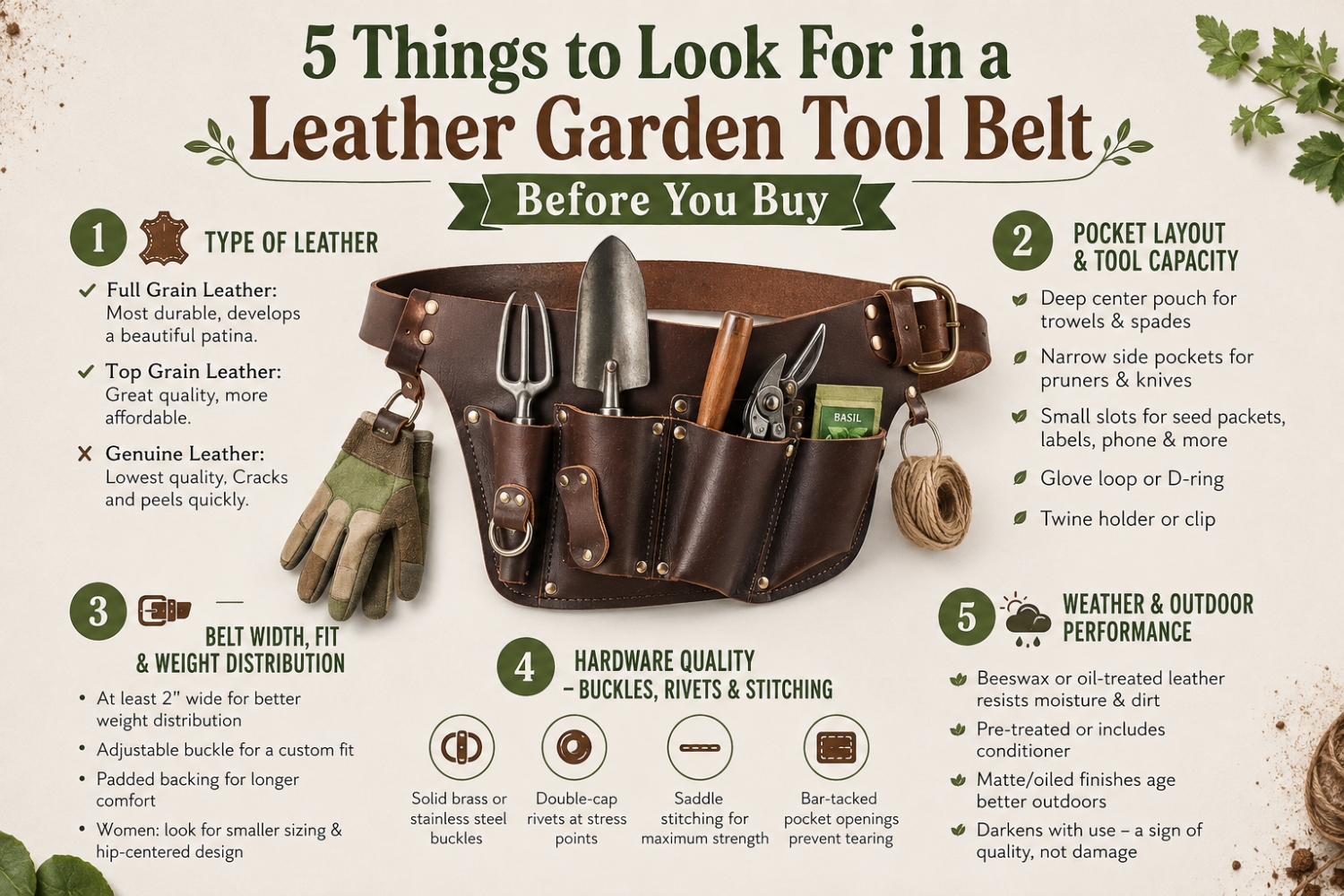
5 Things to Look For in a Leather Garden Tool Belt Before You Buy
Not all leather is created equal, and neither are all tool belts. Here are the five most important factors to evaluate before making a purchase:
1. Type of Leather - Full Grain vs Top Grain vs Genuine Leather
This is the single most important factor. Here's what each grade means for a garden tool belt:
✅ Full Grain Leather: The highest quality. The natural grain is intact, making it the most durable and breathable. It develops a beautiful patina over time. Best for serious gardeners who want a lifetime belt.
✅ Top Grain Leather: The surface is lightly sanded to remove imperfections. Still excellent quality and more affordable than full grain. A solid choice for most gardeners.
✅ Genuine Leather: The lowest tier. Made from leftover scraps. It will crack and peel within 1–2 seasons of outdoor gardening use. Avoid this for outdoor work.
Pro Tip: Always look for "full grain" or "top grain" on the product label. If it just says "genuine leather" or "leather material," it's a lower quality product.
2. Pocket Layout and Tool Capacity
A garden tool belt with pockets needs to be designed specifically for garden tools not construction tools. Look for these pocket types:
🌱 Deep center pouch: Wide enough to hold a hand trowel, cultivator, or transplanting spade upright without wobbling.
🌱 Narrow side pockets: Perfect for pruning shears, a hori hori knife, or a folding saw.
🌱 Small accessory slots: For seed packets, plant labels, a Sharpie, or your phone.
🌱 Glove loop or D-ring: Lets you hang work gloves on the outside so they air out between tasks.
🌱 Twine holder or clip: Garden twine is constantly needed a dedicated holder is a huge quality-of-life upgrade.
3. Belt Width, Fit and Weight Distribution
A leather garden tool belt loaded with tools can get heavy. How that weight is distributed across your hips and lower back makes the difference between a comfortable afternoon of planting and a sore back by noon.
• Look for a belt that is at least 2 inches wide wider belts distribute weight better across the hips. You can try this FloraHolster Premium Gardening Belt
• Adjustable buckle systems (Chicago screws or heavy-duty metal buckles) allow for a custom fit over different clothing layers important for American gardeners dealing with everything from summer shorts to fall layers.
• Some premium leather garden tool belts include padded backing ideal for longer gardening sessions.
• If you're buying a leather tool belt for women, prioritize brands that offer smaller waist sizing and hip-centered weight distribution. Many standard belts are sized for men and sit uncomfortably on women's frames.
4. Hardware Quality - Buckles, Rivets and Stitching
The leather might be perfect, but weak hardware ruins a tool belt fast. Here's what to check:
🔩 Solid brass or stainless steel buckles: Resist rust and corrosion from moisture and soil contact. Avoid zinc alloy hardware it corrodes and weakens quickly outdoors.
🔩 Double-cap copper or brass rivets: Reinforcement at stress points (pocket corners and belt loops) is critical. Single-stitched stress points will fail after heavy use.
🔩 Saddle stitching: Traditional saddle stitching (two needles through each hole) is far stronger than machine lock-stitching. If one thread breaks, saddle stitching doesn't unravel.
🔩 Bar-tacked pocket openings: A sign of a quality manufacturer — small horizontal stitches at the top corners of pockets prevent tearing when you grab tools repeatedly.
5. Weather and Outdoor Performance
Your leather garden tool belt will face dirt, mud, rain, morning dew, fertilizers, and UV sun exposure often in the same afternoon. Here's how to evaluate outdoor performance:
• Full grain leather treated with beeswax or neatsfoot oil conditioning resists moisture far better than untreated leather.
• Look for a belt that has been pre-treated or comes with a leather conditioner. This tells you the manufacturer actually tested it outdoors.
• Avoid patent leather or highly polished finishes they crack under outdoor conditions. Matte or oiled finishes age much better.
• A good leather garden tool belt will darken slightly with outdoor use and conditioning this is a sign of quality aging, not damage.
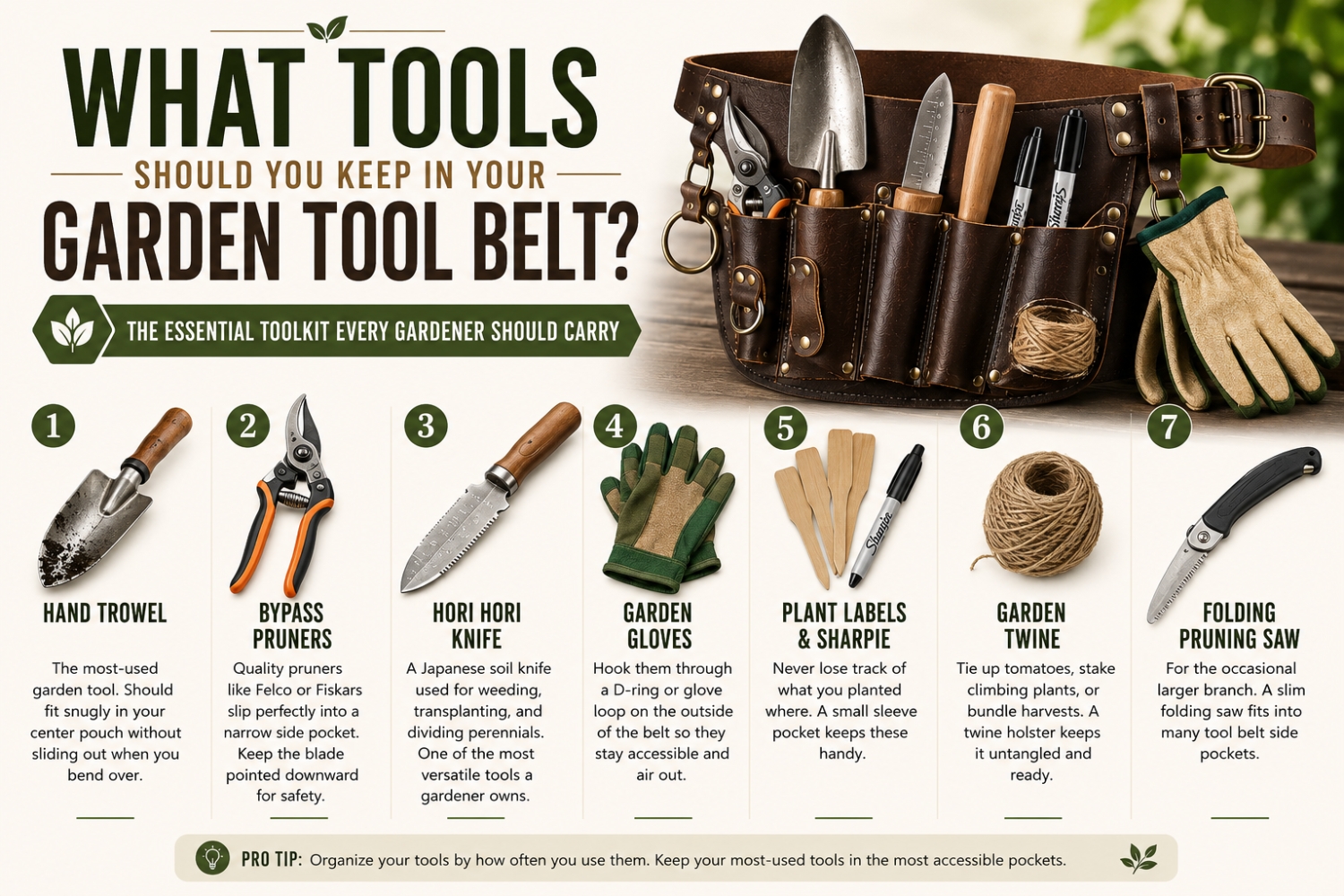
What Tools Should You Keep in Your Garden Tool Belt?
The best leather garden tool belt in the world is only as useful as what you put in it. Here's the essential toolkit that every gardener should carry on their belt:
🌻 Hand Trowel: The most-used garden tool. Should fit snugly in your center pouch without sliding out when you bend over.
🌻 Bypass Pruners: Quality pruners like Felco or Fiskars slip perfectly into a narrow side pocket. Keep the blade pointed downward for safety.
🌻 Hori Hori Knife: A Japanese soil knife used for weeding, transplanting, and dividing perennials. One of the most versatile tools a gardener owns.
🌻 Garden Gloves: Hook them through a D-ring or glove loop on the outside of the belt so they stay accessible and air out.
🌻 Plant Labels and Sharpie: Never lose track of what you planted where. A small sleeve pocket keeps these handy.
🌻 Garden Twine: Tie up tomatoes, stake climbing plants, or bundle harvests. A twine holster keeps it untangled and ready.
🌻 Folding Pruning Saw: For the occasional larger branch. A slim folding saw fits into many tool belt side pockets.
Leather vs Canvas Garden Tool Belt
Still unsure if leather is right for you? Here's how it stacks up against the most common alternative:
Feature | Leather Garden Tool Belt | Canvas Garden Tool Belt
Durability | 10–20+ years | 1–3 seasons
Weather Resistance | Excellent (when conditioned) | Poor (absorbs moisture)
Pocket Structure | Rigid and self-supporting | Collapses when empty
Comfort Over Time | Molds to your body | Stays stiff or frays
Aesthetics | Classic, professional look | Utilitarian
Price | $60–$150+ | $20–$50
Value Long-Term | Excellent (cost per year) | Poor (frequent replacement)
How to Care for Your Leather Garden Tool Belt
A leather garden tool belt is a long-term investment. Treat it right and it will last for decades. Here's a simple care routine:
🧴 After every use: Brush off loose soil and dirt with a dry cloth or soft brush. Don't let mud dry into the leather.
🧴 Monthly (or after rain): Apply a quality leather conditioner like neatsfoot oil, beeswax leather balm, or Leather Honey. This prevents cracking and maintains water resistance.
🧴 Seasonal deep clean: Use a damp cloth with a small amount of saddle soap to clean the leather surface. Allow to dry completely before conditioning. Never use dish soap or bleach these strip the leather's natural oils.
🧴 Storage: Store in a cool, dry place away from direct sunlight when not in use. Hang it on a hook to maintain the belt's shape and allow air circulation.
🧴 Avoid: Prolonged submersion in water, harsh chemical fertilizers splashing directly on the leather, or leaving it in a hot car during summer — heat dries and cracks leather rapidly.
📌 Related Read: [How to Care for a Leather Garden Tool Belt (Rain, Dirt & Sun) – Full Guide]
Who Should Buy a Leather Garden Tool Belt?
A leather garden tool belt is the right choice for:
✅ Serious home gardeners who spend 5+ hours a week in their garden and are tired of making multiple trips to their tool shed
✅ Professional landscapers and horticulturists who need durable, professional-grade equipment that holds up to daily use
✅ Raised bed and vegetable gardeners who work in tight spaces and need tools immediately to hand
✅ Gift buyers a leather garden tool belt makes one of the most practical and thoughtful gifts for gardeners, especially around Mother's Day, Father's Day, or Christmas
✅ Gardeners upgrading from canvas or nylon belts who are ready to invest in something that won't need replacing every season
Frequently Asked Questions About Leather Garden Tool Belts
Q: Is leather good for garden tool belts?
A: Yes leather is one of the best materials for garden tool belts. It's naturally durable, holds its pocket shape even when empty, resists light moisture when properly conditioned, and gets more comfortable with use as it molds to your body. Full grain and top grain leather significantly outperform canvas and nylon for outdoor gardening use.
Q: How many pockets does a garden tool belt need?
A: Most gardeners need at minimum: one deep center pouch (for a trowel), two narrow side pockets (for pruners and a hori hori knife), two small accessory pockets (for labels and seeds), and a glove loop or D-ring. Premium leather garden tool belts may offer 6–10 pockets or attachment points.
Q: Will a leather tool belt hold up in the rain?
A: A properly conditioned full grain or top grain leather tool belt will handle light rain and morning dew without damage. The key is regular conditioning with a beeswax balm or neatsfoot oil, which maintains the leather's natural water resistance. Avoid prolonged submersion in water.
Q: What is the best leather garden tool belt for women?
A: Women should look for a leather garden tool belt that offers smaller waist sizing (many standard belts are sized for men), hip-centered weight distribution, and lighter overall weight. Some brands offer gender-specific versions with narrower belt widths and adjusted pocket positioning.
Q: How long does a leather garden tool belt last?
A: A quality full grain leather garden tool belt can last 10–20 years with proper care. This makes the higher upfront cost extremely worthwhile compared to canvas belts that may need replacing every 1–3 seasons.
Q: What's the difference between a garden tool belt and a garden tool bag?
A: A garden tool belt is worn on your body, keeping tools within arm's reach as you move through the garden — ideal for active tasks like pruning, transplanting, and weeding. A garden tool bag sits on the ground and works better for a stationary workspace. Most serious gardeners eventually own both.
Final Verdict
Absolutely and here's the simple math: a cheap canvas tool belt costs $25 and lasts 2 seasons. That's $12.50 per year. A quality leather garden tool belt costs $100 and lasts 15+ years. That's under $7 per year and it looks better, feels better, and performs better every single season. When you factor in the convenience of having every tool right at your hip, the ergonomic benefit of a well-fitted belt, and the satisfaction of owning something genuinely well-made, the choice is clear.
The best leather garden tool belt is the one that fits your waist, holds your most-used tools, and is made from full grain or top grain leather with solid hardware and saddle stitching. If it checks those boxes, you've found a gardening companion that will outlast most of the plants in your garden.
Ready to upgrade your gardening setup? Browse our handcrafted leather garden tool belts built in the USA, stitched to last, and designed specifically for serious gardeners. → Shop Leather Garden Tool Belts