Best Leather Tool Belt for Carpenters in 2026
· By Hamza Ehsan
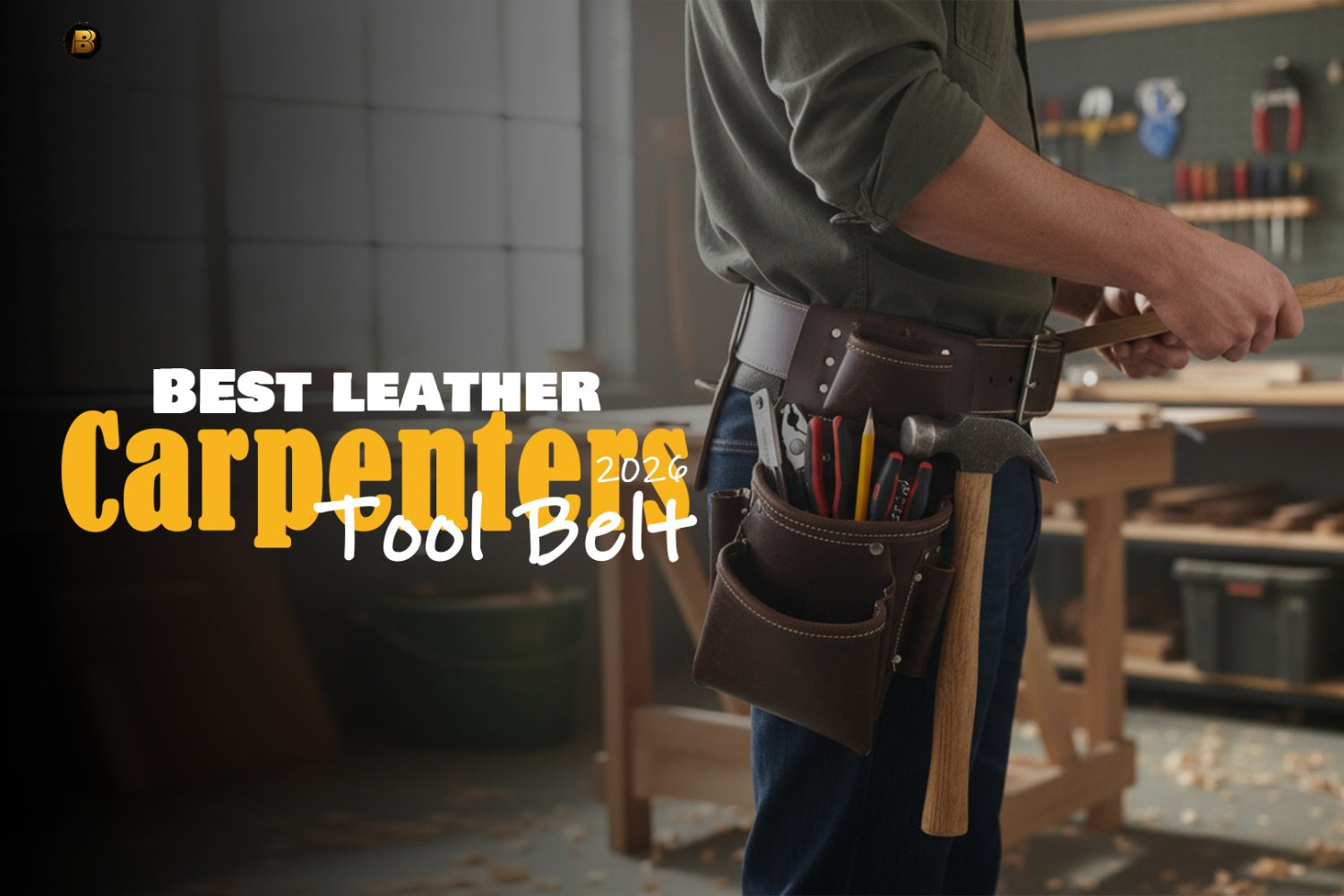
If you're a carpenter, your tool belt isn't just a convenience it's the backbone of your entire workflow. A great leather tool belt for carpenters keeps your most-used tools within arm's reach, distributes weight across your hips so your back doesn't pay the price at the end of a long day, and holds up through thousands of hours of demanding jobsite use. A poor one slows you down, digs into your hips, and falls apart when you need it most.
In this guide, we break down exactly what makes the best leather tool belt for carpenters the features that matter most, the red flags to avoid, and how to find the right setup for your specific trade. Whether you're a seasoned framer, a finish carpenter, or just getting started in the trades, this guide is built for you.
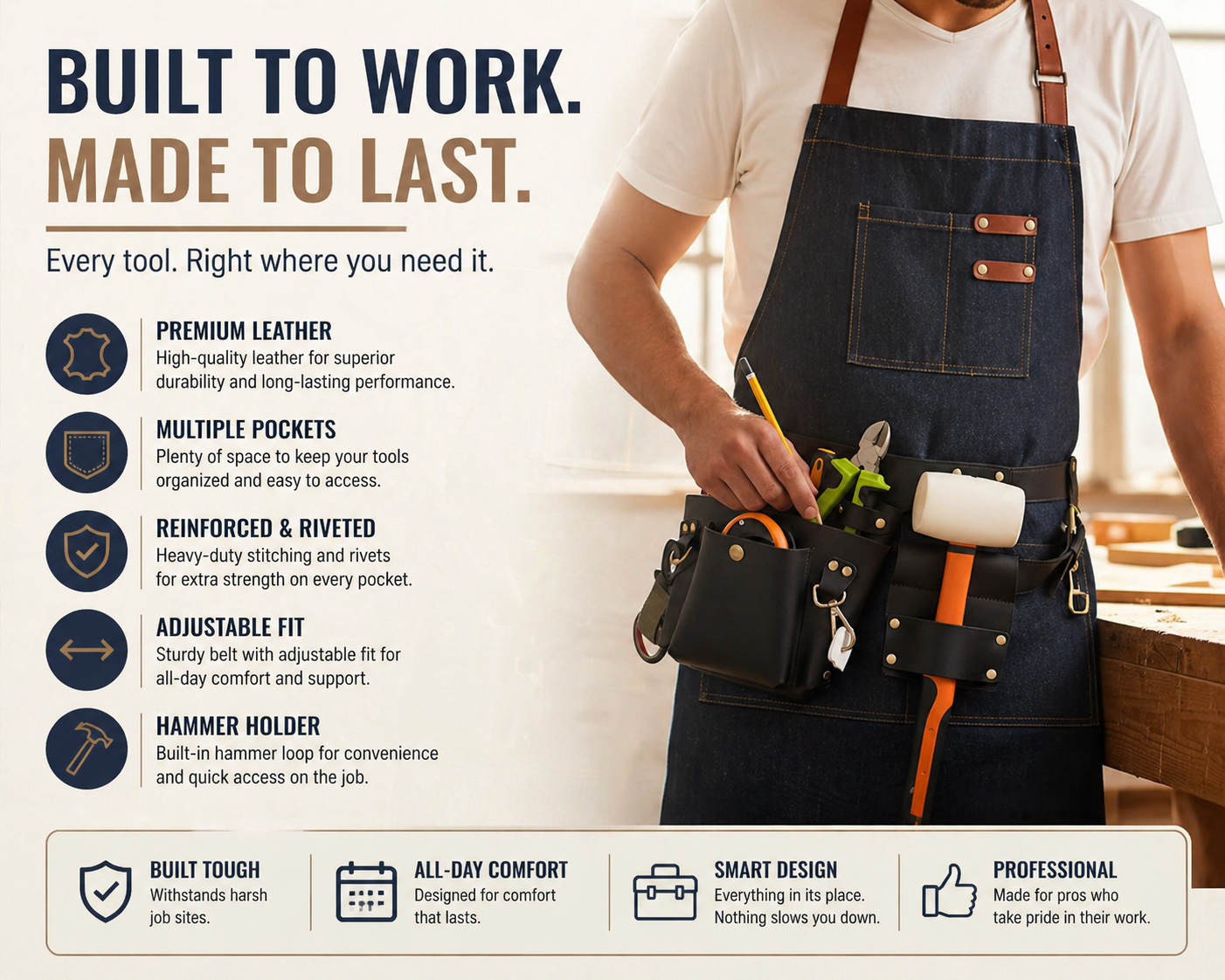
Why Carpenters Need a Dedicated Leather Tool Belt
Not all tool belts are created equal, and the demands of carpentry are unique. Carpenters carry a heavy, varied mix of tools hammers, squares, pencils, tape measures, chisels, utility knives, nail sets, and fasteners all at the same time. You need a belt that can handle serious weight, keep every tool in a consistent, easy-to-reach position, and flex with your body as you bend, crouch, climb, and reach throughout the day.
Leather is the material of choice for serious carpenters for good reason. Full-grain leather tool belts are stronger than nylon or canvas, mold to your body over time for a custom fit, resist abrasion from rough lumber and concrete surfaces, and simply last longer than synthetic alternatives. A quality leather carpenter tool belt treated well can last a decade or more of daily professional use.
Pro tip: Full-grain leather is the highest quality leather available. It retains the natural grain of the hide, making it significantly more durable and resistant to wear than top-grain or split leather alternatives.
Key Features to Look for in the Best Leather Tool Belt for Carpenters
1. Leather Quality: Full-Grain is Non-Negotiable
The single most important factor in any leather tool belt is the quality of the leather itself. Always look for full-grain leather not top-grain, not split leather, and certainly not bonded leather. Full-grain leather uses the entire thickness of the hide, including the toughest outermost layer, which gives it unmatched tensile strength and resistance to puncture and abrasion.
Top-grain leather is sanded down to remove imperfections, which makes it look cleaner but weakens the fiber structure. Split leather is made from the inner layers of the hide much softer and less durable. For carpenters who are hard on their gear, only full-grain leather stands up to daily punishment.
At Bolt Belts, every carpenter tool belt is crafted from premium full-grain leather, selected specifically for its density, grain tightness, and long-term performance.
2. Pocket Layout and Organization
The best leather carpenter tool belts are designed around the tools you actually use every day. Look for a layout that includes:
• Deep main pouches: Wide enough to hold a framing hammer or large combination square without tipping.
• Narrow pencil slots: Multiple pencil holders positioned where you reach instinctively.
• Tape measure clip or loop: A dedicated clip that holds your tape securely but releases fast.
• Nail and fastener slots: Divided fastener pockets so different screw sizes don't mix.
• Utility knife holder: A secure sheath that protects the blade and keeps the handle accessible.
• Chisel or screwdriver loops: Individual tool loops prevent tools from rattling and getting damaged.
The goal is muscle memory you should be able to reach for any tool without looking down. The right carpenter tool belt layout lets you stay focused on the work, not on hunting for tools.
3. Width and Weight Distribution
A good leather work belt for carpenters should be at least 2 inches wide to distribute weight evenly across the hips. Wide belts (3–5 inches) are even better for heavy loads, spreading the pressure over a larger surface area and dramatically reducing hip fatigue on long days. Look for belts with a padded back panel or contoured hip padding if you regularly carry more than 10–15 lbs of tools.
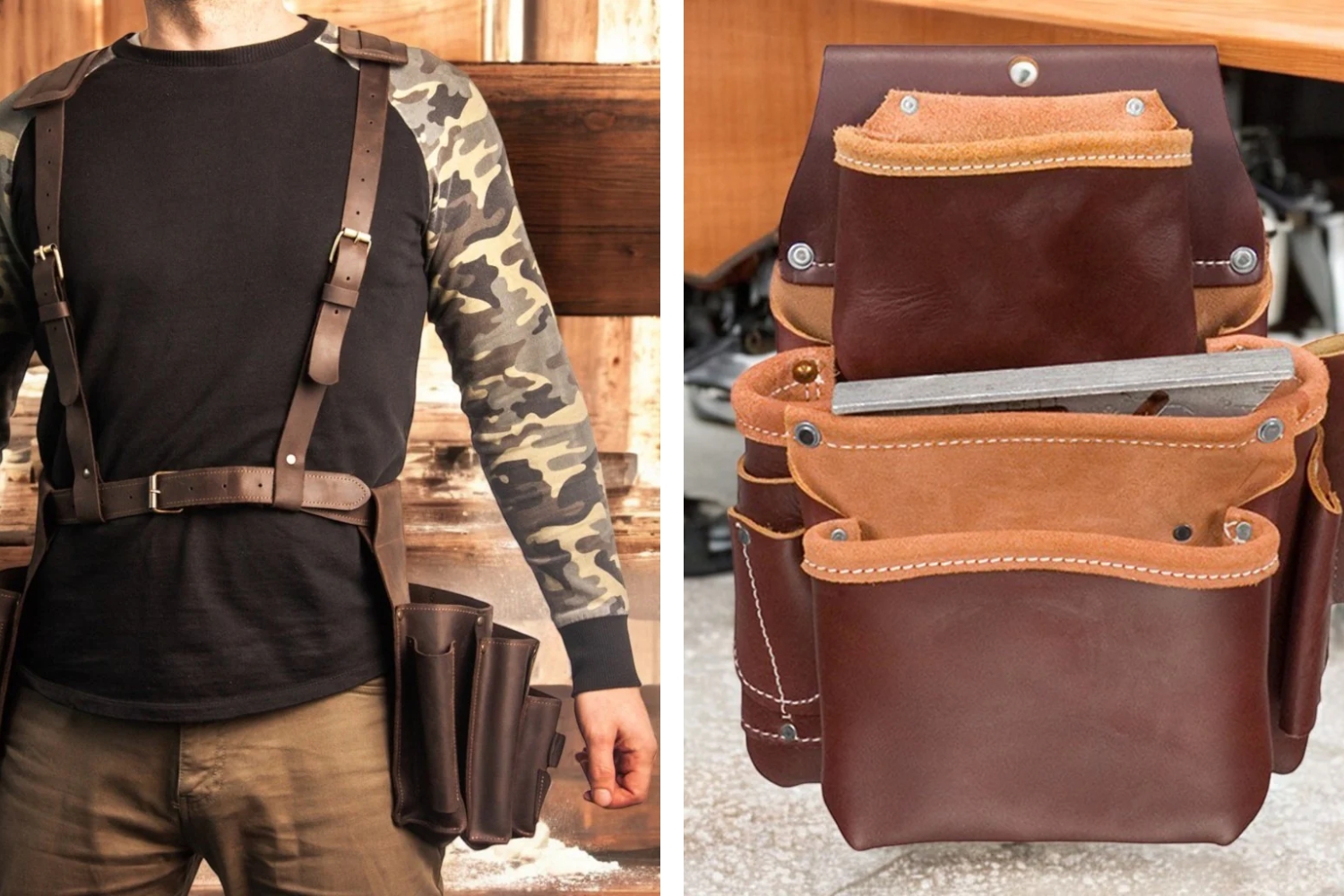
Suspenders are a major upgrade for heavy setups. A quality pair of leather tool belt suspenders transfers weight off your hips and onto your shoulders, virtually eliminating the lower-back and hip pain that plagues carpenters who carry full rigs all day.
4. Stitching, Rivets, and Hardware
The points of failure on any tool belt are the stress points where pouches connect to the belt, where belt loops are attached, and anywhere that takes repeated load. Look for:
• Double or triple stitching at all attachment points
• Copper or brass rivets at high-stress corners
• Heavy-gauge buckle hardware with a secure closure
• Reinforced bottoms on all pouches
Cheap stitching and thin rivets are the primary reason lower-quality tool belts fail within months. Proper reinforcement at stress points is what separates a $50 belt from a $150+ belt and it's what makes the investment worthwhile.
5. Fit and Adjustability
A leather tool belt for carpenters needs to fit your body, not fight it. It should sit on your hips not your waist and feel snug without restricting movement. Most professional-grade belts are available in multiple waist sizes or offer broad adjustment ranges. Always measure your hip circumference (not your waist) when sizing a tool belt.
Custom-fit leather tool belts, like those offered by Bolt Belts, take this one step further built to your specific measurements so the belt sits exactly where it should from the first day you put it on, without the long break-in period of standard belts.
Leather Tool Belt Sets vs Individual Pouches for Carpenters
Carpenters have two main options: buying a complete leather tool belt set (belt + matched pouches + hardware) or building a custom rig with individual pouches. Both approaches have merit.
Complete sets are the faster, more affordable route. They're designed to work together proportioned correctly, balanced on the belt, and matched in style and leather grade. For most carpenters, a well-chosen set covers every daily need.
Individual pouches offer maximum customization. If your work changes by project framing on one job, trim carpentry on the next you can swap out pouches to match the task. This modular approach costs more upfront but gives you a single belt that serves every type of carpentry work.
Bolt Belts offers both complete carpenter tool belt sets and individual leather pouches, holders, and suspenders so you can start with a set and build from there as your needs evolve.
How to Size Your Leather Carpenter Tool Belt
Sizing your tool belt correctly is one of the most overlooked steps in the buying process. Too tight and you're uncomfortable all day. Too loose and the belt slips down under tool weight, throwing off your balance and causing hip bruising.
Here's how to size properly:
• Measure your hips, not your waist. Wear your work pants and measure around the widest part of your hips this is where the tool belt will sit.
• Add 2–4 inches to your hip measurement if you typically wear thick work pants or layer clothing in cold weather.
• Check the belt's adjustment range to confirm your measurement falls near the middle of the range, giving room to tighten or loosen.
• Try it loaded. A belt that fits empty may feel different with 15 lbs of tools wear it for a few minutes with weight before committing.
Breaking In Your New Leather Carpenter Tool Belt
New full-grain leather tool belts are stiff right out of the box. This is normal and actually a sign of quality leather. The stiffness comes from the dense fiber structure that makes the belt so durable. Here's how to break it in correctly:
• Apply leather conditioner before first use. A high-quality conditioner softens the leather without weakening it and helps it begin conforming to your body faster.
• Wear it loaded from day one. The weight of your tools is the best thing to shape the belt. Don't wear it empty during the break-in period.
• Flex it manually. Bend and flex the pouches and belt by hand during the first few days to loosen the fibers.
• Be patient. A proper full-grain leather tool belt takes 2–4 weeks to fully mold to your body. After that, it fits better than any synthetic belt ever will.
How to Care for Your Leather Tool Belt to Make It Last
With proper care, a high-quality leather carpenter tool belt can last 10 to 15 years of professional use. Here's what proper maintenance looks like:
• Clean with a damp cloth after dusty or dirty work. Never use soap or household cleaners.
• Apply leather conditioner every 2–3 months to prevent drying and cracking.
• If the belt gets soaked, let it air dry naturally away from direct heat. Never use a heat gun or dryer.
• Store in a cool, dry place when not in use. Avoid prolonged direct sunlight which fades and dries the leather.
• Check stitching and rivets every few months. Catch small issues early before they become failures.
Why Bolt Belts Is the Right Choice for Carpenter Tool Belts
At Bolt Belts, we build every carpenter tool belt from premium full-grain leather selected for its grain density, durability, and long-term performance. Our belts are handcrafted by skilled artisans who understand the demands of real trades work because every design decision is made with the working carpenter in mind.
Every Bolt Belts carpenter tool belt features:
• Premium full-grain leather construction throughout
• Double-stitched seams and copper rivet reinforcement at all stress points
• Thoughtfully engineered pocket layouts designed around how carpenters actually work
• Custom fit options to match your exact measurements
• A range of belt widths, pouch configurations, and suspender options
Whether you're framing, finishing, or doing detail work, Bolt Belts has a leather carpenter tool belt built for how you work.
Final Thoughts
The best leather tool belt for carpenters is one that fits your body, holds your specific tools in exactly the right positions, and is built from material tough enough to last through years of daily professional use. Full-grain leather, proper pocket layout, reinforced hardware, and correct sizing are the non-negotiables. A quality leather carpenter tool belt isn't an expense it's an investment in your productivity, your comfort, and your professional longevity. The right belt means less time hunting for tools, less hip and back pain at the end of a long day, and a rig that gets better with every week of use as the leather molds to your body.
Ready to find your perfect carpenter tool belt? Browse Bolt Belts' full range of handcrafted full-grain leather tool belts, sets, and accessories — built for professionals who demand the best.