Why "Buy Once, Cry Once" Doesn't Always Apply to Tool Belts
· By Hamza Ehsan
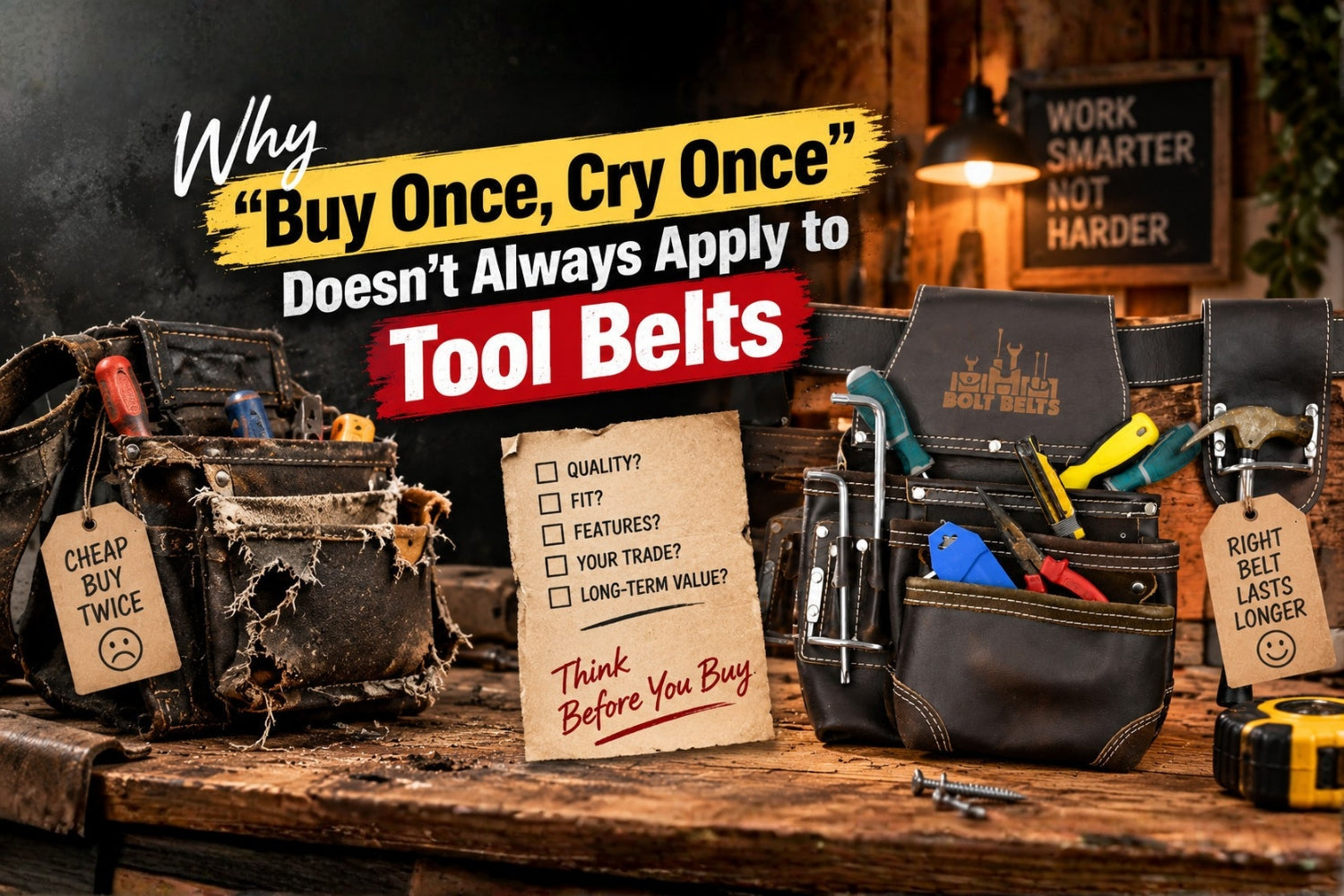
"Buy once, cry once." It's practically gospel in the trades spend more up front, avoid replacing cheap junk twice a year. And most of the time, it's solid advice. But treated as an absolute rule, it can talk people into overspending on the wrong thing, or underspending because they think the phrase gives them permission to skip research as long as the price tag is high enough.
Here's where the advice holds up, and where it doesn't.
Where "Buy Once, Cry Once" Is Right
For tools and gear that take heavy daily abuse power tools, ladders, safety equipment the logic is sound. A cheap version fails faster, sometimes dangerously, and the cost of repeated replacement (plus downtime) usually does add up to more than the premium option would've cost.
For a tool belt specifically, this holds true when you're comparing a bonded-leather or entry-level nylon belt to a well-made full-grain leather tool belt. The expensive option genuinely outlasts the cheap one by years, not months.
Where the Advice Breaks Down
Price isn't a quality guarantee. A high price tag doesn't automatically mean better materials or construction some brands charge a premium for a name, not for anything measurably better underneath. "Buy once, cry once" only works if you're actually buying quality, not just buying expensive.
The most expensive option isn't always the right fit. A $300 belt loaded with features a framer will never use isn't a better buy than a simpler $150 belt built specifically for framing it's just a more expensive way to end up unhappy with your setup.
New tradespeople don't always know what they need yet. If you're early in your career, buying the top-tier setup before you know your own preferences (pouch layout, weight tolerance, working style) can mean paying premium prices to relearn what you actually want a year later. If this is your first belt, it's worth reading what tradespeople wish they knew before buying their first tool belt before you commit to a price point.
Sometimes "cry once" is more than money. An expensive belt that doesn't fit right, or isn't built for your specific trade, causes daily discomfort no price justifies. Comfort and fit matter as much as material quality arguably more, since you're wearing it eight-plus hours a day.
A Better Rule: Buy Right, Not Just Expensive
Instead of "spend the most," a better standard is "spend appropriately for the trade, the fit, and how long you'll actually use it." That might mean:
- A mid-range leather belt built specifically for your trade browse our full range of tool belts by trade rather than defaulting to whatever's most expensive.
- Starting with a solid, adjustable option while you're new, then upgrading once you know your preferences.
- Prioritizing fit and trade-specific design over the sticker price our sizing and configuration guide can help you match a belt to how you actually work.
When It's Genuinely Worth Spending More
To be clear this isn't an argument for buying cheap. Full-grain leather really does outlast synthetic materials. Solid stitching really does hold up to years of daily strain in a way that cut corners can't. The point isn't "spend less," it's "spend on the right things" material, construction, and fit, not just the size of the number on the price tag.
FAQs
So should I still spend more on a tool belt?
Generally, yes for materials and construction that hold up daily, spending more is usually worth it. The caution is against assuming a higher price automatically means a better product without checking fit and quality yourself.
How do I know if a tool belt is actually worth the price?
Look at the material (full-grain leather vs bonded or synthetic), the stitching quality, and whether it's designed for your specific trade not just the price tag alone.
Is it ever okay to buy a cheaper tool belt?
Yes, especially early in your career while you're still learning your own preferences, or if you genuinely can't afford the premium option yet. A well-fitted mid-range belt beats a poorly-fitted expensive one.
What matters more than price when buying a tool belt?
Fit and trade-specific design. A belt that's uncomfortable or built for the wrong trade isn't a good buy no matter what it costs.
Does this apply to other trade gear too?
Often, yes. The same logic applies to gloves, boots, and other daily-wear gear spending more only pays off if you're spending on genuine quality and fit, not just a bigger number.
Conclusion
"Buy once, cry once" isn't wrong, but it's not the whole picture either. The real goal isn't the most expensive tool belt you can find it's the one built for your trade, fitted to how you work, and made from materials that actually hold up. Get those three right, and you'll spend once and mean it. Ready to find the right fit? Shop tool belts by trade.